
Updated October 2026 · Sources listed below
Age-related macular degeneration (AMD) damages the macula, the part of the retina responsible for sharp, central vision you use to read and recognize faces. It's a leading cause of vision loss in older adults.
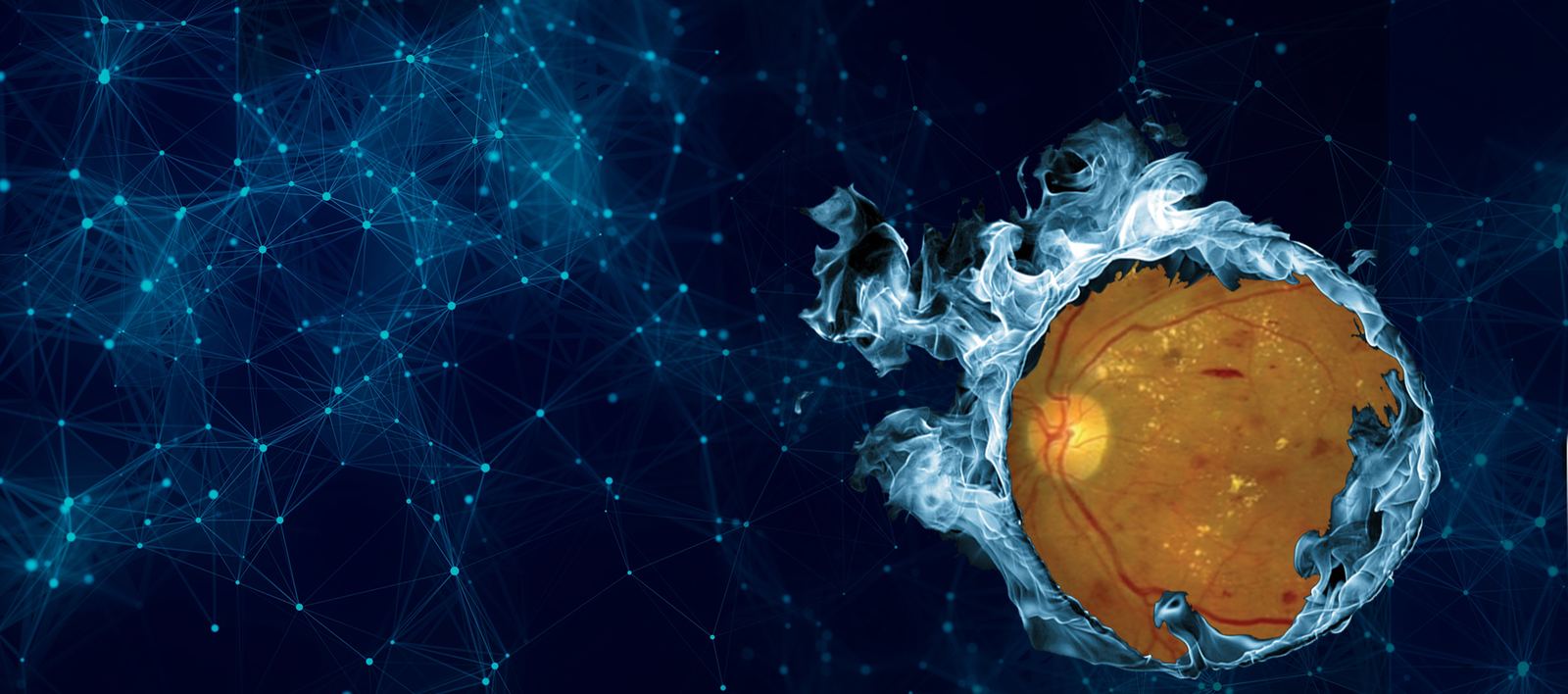
Retinal imaging helps us track macular changes over time. See retinal imaging →
Dry and wet AMD
Dry AMD is the most common form and progresses slowly. Wet AMD is less common but can cause faster vision loss when abnormal blood vessels leak under the retina. Wet AMD needs prompt treatment, usually injections from a retina specialist.
Early signs
- Blurry or dim central vision
- Straight lines that look wavy or bent
- A blank or dark spot in the center of your vision
- Needing more light to read
Lowering your risk
Not smoking is the most important thing you can change. A diet rich in leafy greens and fish also helps. AREDS2 vitamin formulas can slow progression for people with intermediate AMD or advanced AMD in one eye, but they are not recommended for people without AMD.
How Fenix Lumi can help
We screen for AMD with dilated exams and retinal imaging, monitor changes over time, advise on whether AREDS2 vitamins fit your stage, and refer to a retina specialist for injections when needed.
Over 50 and due for a retina check?
Book an eye exam at our Chino or Moreno Valley office.
Sources
- Age-Related Macular Degeneration (AMD) — National Eye Institute (NIH)
- AREDS 2 Supplements for AMD — National Eye Institute (NIH)
- Vitamins for AMD — American Academy of Ophthalmology
This page is general health information. For advice about your own eyes, book an exam with one of our optometrists. For sudden vision loss, an eye injury or a chemical splash, call 911 or go to the nearest emergency room.